
Overview
The railway industry is rapidly adopting advanced visualization technologies to improve manufacturing accuracy, workforce training, and process standardization. A leading railway manufacturing company required a highly detailed railway manufacturing animation to demonstrate the complete train cabin window installation workflow used during railway coach production and assembly operations.
The client wanted a realistic and technically accurate industrial technical training animation that could simplify complex engineering procedures and improve workforce understanding across production, inspection, and quality control teams. Traditional manuals and static documents were not sufficient for explaining the complete installation process, adhesive bonding workflow, sealing procedures, and inspection standards involved in railway coach manufacturing.
To solve this challenge, a complete engineering process animation was developed to visualize the railway coach window installation process with step-by-step industrial workflow representation, safety compliance procedures, and technical manufacturing standards.
Client Requirement
The primary objective of the project was to create a high-quality railway manufacturing animation capable of improving industrial technical training and manufacturing communication.
The client specifically required:
- Complete visualization of train cabin window installation procedures
- Detailed railway coach assembly animation
- Realistic industrial adhesive bonding demonstration
- Surface preparation and contamination removal process visualization
- Glass lifting and alignment inspection workflow
- Joint sealing and curing process animation
- Engineering SOP training support
- Manufacturing quality inspection visualization
- Industrial safety and PPE compliance representation
- Easy-to-understand technical workflow presentation
The client also wanted the animation to function as a reusable industrial process 3D animation for employee onboarding, factory presentations, technical demonstrations, railway engineering meetings, and industrial safety training programs.
Planning & Development
The project started with detailed engineering analysis and workflow planning. Manufacturing references, railway coach assembly standards, and technical installation procedures were carefully studied to ensure the railway manufacturing animation accurately represented real production environments.
The production planning phase included:
- Railway coach CAD model optimization
- Industrial workflow breakdown
- Technical storyboard creation
- Manufacturing sequence planning
- Engineering camera angle setup
- Adhesive application simulation planning
- Quality control visualization mapping
- Safety workflow integration
The goal was to create an immersive industrial technical training animation capable of visually explaining every stage of the railway coach window installation process.
Process & Execution
The animation process began with surface grinding and contamination removal procedures performed before adhesive application. The engineering process animation showcased industrial cleaning standards, primer coating application, and adhesive preparation workflows commonly followed in railway manufacturing facilities.
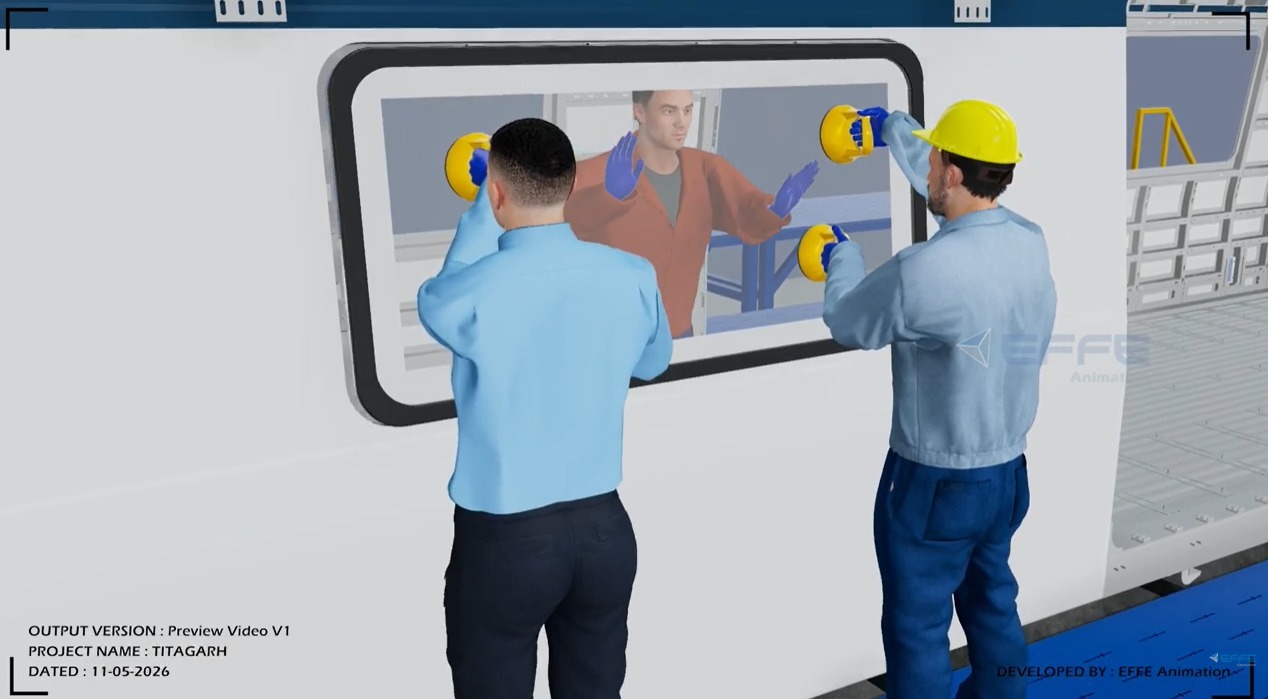
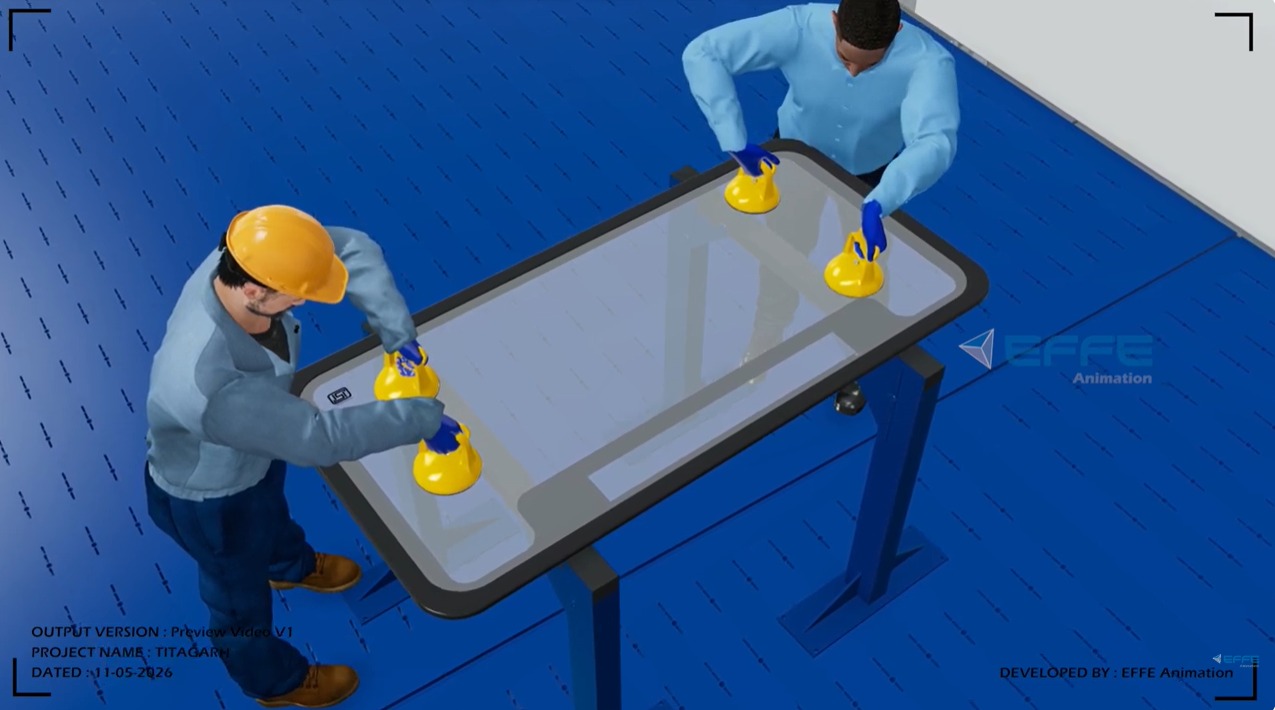
The next sequence demonstrated rubber pad positioning according to engineering drawings and manufacturing standards. The animation then visualized glass handling operations using a suction cup lifting system designed for precision window installation.
The railway coach assembly animation highlighted:
- Adhesive bead profile application
- Precision train window placement
- Window flushness inspection
- Alignment verification procedures
- Temporary fixing process
- Adhesive curing workflow
- Joint sealing operations
- Final finishing procedures
- Quality control checkpoints
The complete industrial process 3D animation was designed with realistic materials, manufacturing textures, industrial lighting environments, and engineering-focused motion sequences to improve viewer engagement and technical understanding.
Advanced rendering techniques were used to create realistic adhesive behavior, accurate glass reflections, and high-detail railway coach assembly visuals. Multiple camera perspectives and close-up engineering views were included to enhance technical clarity.
Challenges & Solutions
One of the main challenges was translating highly technical railway engineering procedures into visually engaging content suitable for workers, trainees, engineers, and management teams.
Another challenge involved accurately simulating industrial adhesive application, curing stages, and sealing workflows while maintaining clarity for technical training purposes.
To overcome these challenges, simplified sectional views, process zoom-ins, and slow-motion workflow sequences were incorporated into the industrial technical training animation. These techniques improved understanding while preserving engineering accuracy and manufacturing authenticity.
The project also required balancing technical precision with presentation quality so the railway manufacturing animation could serve both training and corporate communication purposes.
Final Deliverables
The final deliverables included:
- High-resolution railway manufacturing animation
- Detailed railway coach assembly animation
- Full industrial technical training animation
- Engineering SOP training visualization
- Manufacturing workflow presentation video
- Industrial safety process animation
- Quality inspection and sealing process visualization
- Technical industrial process 3D animation for presentations and training
Conclusion
The completed railway manufacturing animation successfully transformed a complex railway coach installation procedure into an engaging and highly understandable visual training experience. The project improved engineering communication, workforce learning, and manufacturing workflow presentation through advanced engineering process animation and realistic industrial visualization techniques.
By combining technical accuracy, manufacturing realism, and immersive storytelling, the project demonstrated how industrial technical training animation and industrial process 3D animation can significantly improve modern railway manufacturing training and industrial communication workflows.